Singapore is actively translating its extensive quantum research into commercial market opportunities by leveraging its advanced semiconductor manufacturing base. This initiative opens distinct avenues for international tech firms to collaborate on next-generation hardware and component scaling.
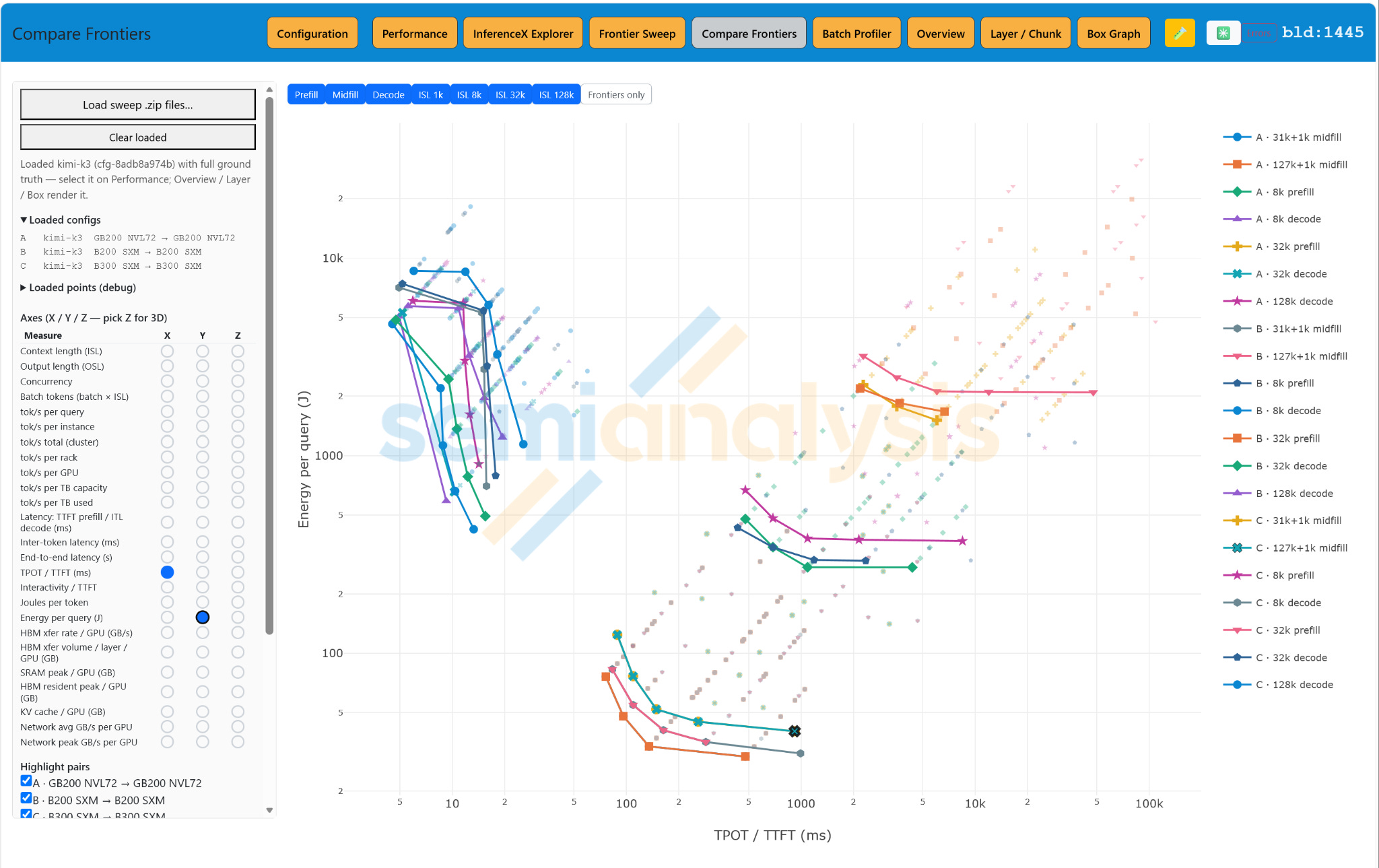
Scaling Mixture of Experts (MoE) inference requires disaggregating workloads across prefill, midfill, and decode stages to balance compute intensity and data movement. Hardware architects must optimize memory bandwidth, local interconnects, and caching strategies to prevent bottlenecks across multi-rack clusters.
Embedded Computing Design highlights the foundational software and system architectures driving modern edge intelligence and industrial IoT deployments. Hardware teams must align their firmware roadmaps and edge platforms with scalable software ecosystems to streamline device management.
Recent evaluations of compact networking hardware like the Qotom Q30952UE highlight the integration of multi-gigabit and 10G SFP+ interfaces into small-form-factor appliances. For hardware teams, this trend underscores the growing demand for highly integrated, cost-effective Ethernet controllers and PHYs in edge routing applications.
Scaling Mixture of Experts (MoE) inference requires disaggregating workloads across prefill, midfill, and decode stages to balance compute intensity and data movement. Hardware architects must optimize memory bandwidth, local interconnects, and caching strategies to prevent bottlenecks across multi-rack clusters.
Embedded Computing Design highlights the foundational software and system architectures driving modern edge intelligence and industrial IoT deployments. Hardware teams must align their firmware roadmaps and edge platforms with scalable software ecosystems to streamline device management.
Recent evaluations of compact networking hardware like the Qotom Q30952UE highlight the integration of multi-gigabit and 10G SFP+ interfaces into small-form-factor appliances. For hardware teams, this trend underscores the growing demand for highly integrated, cost-effective Ethernet controllers and PHYs in edge routing applications.
Explosive growth in AI accelerator power consumption is pushing traditional silicon power stages to their limits, driving a shift toward gallium nitride architectures. Hardware teams must adopt high-efficiency GaN power delivery topologies to meet escalating thermal and spatial constraints in next-generation data centers.
Particle by Digi is showcasing its latest embedded hardware platforms, including satellite-enabled IoT modules and AI-accelerated single-board computers, at embedded world North America. These solutions provide hardware engineering teams with pre-integrated building blocks for multi-protocol edge deployments.
Rhizomatica has open-sourced HERMES, a digital shortwave radio system that provides encrypted file transfers and messaging over HF bands for off-grid locations. This development introduces alternative, low-infrastructure communication hardware options for remote telemetry, emergency systems, and field deployments.
Highly integrated multibeam beamformers enable compact phased-array antennas by reducing size, weight, and power (SWaP) for satellite payloads. This integration simplifies board layouts and helps hardware teams manage tight lattice spacing at high frequencies.
Scaling high-speed parallel reads and write-path optimizations significantly reduces large-scale database replication times as enterprise data volumes swell. For hardware architects, this data-intensive processing shift places heavy demands on server memory bandwidth, high-IOPS storage controllers, and low-latency network fabrics.
Rhizomatica has open-sourced HERMES, a digital shortwave radio system that provides encrypted file transfers and messaging over HF bands for off-grid locations. This development introduces alternative, low-infrastructure communication hardware options for remote telemetry, emergency systems, and field deployments.
Highly integrated multibeam beamformers enable compact phased-array antennas by reducing size, weight, and power (SWaP) for satellite payloads. This integration simplifies board layouts and helps hardware teams manage tight lattice spacing at high frequencies.
Scaling high-speed parallel reads and write-path optimizations significantly reduces large-scale database replication times as enterprise data volumes swell. For hardware architects, this data-intensive processing shift places heavy demands on server memory bandwidth, high-IOPS storage controllers, and low-latency network fabrics.
Scaling robotics foundation models exposes heavy downstream bottlenecks in edge inference, heterogeneous compute, and real-time control integration. Hardware teams must balance tight bill-of-materials (BOM) limits against demanding processing requirements for physical AI workloads.
Configurable analog front-end (AFE) and mixed-signal matrices allow design engineers to repeatedly reuse a flexible hardware platform across multiple projects. This approach significantly streamlines bill of materials (BOM) optimization and compresses prototype cycles by replacing dozens of discrete passive and active components.
Next-generation human-machine interfaces are evolving past basic touchscreens into context-aware systems powered by edge AI and multi-sensor fusion. For hardware teams, this shift requires selecting MCUs and processing platforms capable of handling local voice, radar, and vision workloads without relying on cloud connectivity.
Next-generation human-machine interfaces are evolving past basic touchscreens into context-aware systems powered by edge AI and multi-sensor fusion. For hardware teams, this shift requires selecting MCUs and processing platforms capable of handling local voice, radar, and vision workloads without relying on cloud connectivity.