


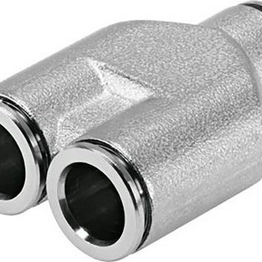
Identify the thread by measuring the diameter and pitch. Common standards include NPT (tapered) and BSPP (parallel); these are not interchangeable and require specific adapters.
Pneumatic & Hydraulic Fittings Component Intelligence
Precision-engineered fluid power connectivity for industrial automation.
What are Pneumatic & Hydraulic Fittings components?
Fittings, couplings, and distributors are the critical junctions in fluid power systems. Selection hinges on pressure ratings, media compatibility, and connection geometry. Always verify thread standards and seal materials to prevent leaks in high-cycle automation environments.
How to Choose Pneumatic & Hydraulic Fittings Components
Selecting the right fluid power hardware requires balancing mechanical load, chemical exposure, and installation speed.
Pressure Rating
Ensure the fitting's burst pressure exceeds your system's maximum operating pressure with a safety factor.
Media Compatibility
Match seal materials (e.g., Viton, NBR) to the fluid or gas to prevent degradation and premature failure.
Connection Type
Choose between push-to-connect for speed or threaded/compression for high-vibration, permanent installations.
Flow Capacity
Verify the orifice size to ensure the fitting does not become a flow restriction in your pneumatic circuit.
Environmental Factors
Consider corrosion resistance; stainless steel is preferred for washdown or harsh chemical environments.
Popular Pneumatic & Hydraulic Fittings Components
Live| # | Part | Category |
|---|---|---|
| #1 |  | Hydraulics |
| #2 |  | Hydraulics - Fittings |
| #3 |  | Hydraulics - Fittings |