


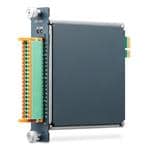


Passive ICs are powered by the RF field generated by the reader, making them ideal for low-cost, maintenance-free tags. Active ICs include an internal battery to boost signal range and support additional sensors for active monitoring.
RFID, RF Access, Monitoring ICs Component Intelligence
Engineering-grade ICs for secure identification and proximity sensing.
What are RFID, RF Access, Monitoring ICs components?
RFID and access monitoring ICs are specialized transceivers and transponders designed for contactless identification. Selection hinges on operating frequency (LF, HF/NFC, UHF), protocol compliance (ISO/IEC 14443, 15693, 18000), and memory capacity for secure data storage.
How to Choose RFID, RF Access, Monitoring ICs Components
Selecting the right RFID IC requires balancing range, power, and security requirements.
Frequency Band
Match the IC to your range needs: LF (125kHz) for short-range, HF/NFC (13.56MHz) for proximity, or UHF (860-960MHz) for long-range tracking.
Protocol Compliance
Ensure the IC supports the required standard (e.g., ISO 14443 for payment/access, ISO 18000-6C for logistics) to guarantee reader interoperability.
Memory & Security
Evaluate the EEPROM/FRAM capacity and hardware-level encryption features if the application involves secure authentication or data logging.
Power Architecture
Determine if the design requires passive (field-powered) operation or active (battery-assisted) ICs for extended range and monitoring.
Form Factor
Consider the physical package (e.g., wafer-level chip scale, SOT) relative to the antenna design and mechanical constraints of the tag or reader.
Popular RFID, RF Access, Monitoring ICs Components
Live| # | Part | Category |
|---|---|---|
| #1 | RF Access | |
| #2 |  | RF Access |
| #3 |  | RF Access |